Currently Empty: ₹0.00





Be Our Distributor / Export With Us / Bulk OrderBuy Bio Fertilizer Online DelhiHydrogel Crystals & Soil Additives Delhi | Moisture RetainerLarge Scale Agriculture Solutions Delhi | PROM & Bio FertilizerMustard Cake Powder & Neem Khali Online Delhi | Organic CakeOrganic Fertilizer Online Buy Delhi | Premium Crop Growth BoostersPotting Mix for Indoor Plants Delhi | Adenium & Succulent SoilVermicompost & Cow Dung Compost Online Delhi | 100% Organic
SAP MyVatika | Nursery & Commercial Buying
If you’re buying plants for a nursery, a landscaping project, a housing society, or any kind of commercial green space — the way you buy matters as much as what you buy.
Most commercial buyers in India start out buying retail. It’s familiar, it’s easy, and it works fine when quantities are small. But somewhere along the way — usually when a project scales up or a client asks for a fixed delivery date — retail stops working and the search for a proper wholesale supplier begins.
That shift is more complicated than it sounds. The line between genuine wholesale and discounted retail is blurry in the Indian market. And a lot of buyers get burned before they figure out the difference.
Here’s what commercial plant buyers in India actually need to know.
The basic difference — and why it matters more than you think
Retail plant buying is simple. You pick what you want, you pay the listed price, and it arrives. The price is the same whether you’re buying two plants or twenty. The seller doesn’t care about your timeline or your project — they care about the transaction.
Wholesale is a different relationship entirely. You’re not just buying plants — you’re entering into a supply arrangement. The price changes based on quantity. The seller has stock commitments, delivery schedules, and account management built into how they operate. And the paperwork — GST invoices, purchase orders, delivery documentation — is part of the process, not an afterthought.
The problem in India is that many sellers call themselves wholesale suppliers without actually operating that way. They offer a flat 10–15% discount on retail and call it wholesale. That’s not wholesale — that’s a mild discount with a misleading label.
Genuine wholesale in the plant and agri-input space in India means:
Tiered pricing — your per-unit cost goes down as your order quantity goes up, with clear breakpoints. Not “call us for pricing.” An actual written price list.
Defined MOQs — minimum order quantities that are fixed and transparent. A supplier who changes the MOQ depending on who’s asking is not a wholesale operation.
Stock commitment — they can tell you exactly what’s available, in what quantity, and when it will be ready. If they can’t answer this without going to “check and call back” every time, they’re too small to be your wholesale supplier.
Logistics capability — they have courier or freight partnerships that can handle bulk deliveries to your location reliably. Not just metro cities. If your project is in Nagpur or Coimbatore, they should be able to tell you exactly how it gets there and when.
B2B documentation — GST invoices, delivery challans, purchase order acknowledgment. If a supplier can’t give you a proper GST invoice, they’re a retail operation regardless of what they call themselves.
Where retail still makes sense for commercial buyers
Retail buying isn’t always wrong — even for commercial buyers. There are situations where it’s actually the better choice.
When you need specialty or rare varieties in small quantities, retail nurseries often carry things that wholesale suppliers don’t bother stocking. If you need three specific adenium varieties for a client’s private garden, you’re not going to find that in a wholesale catalogue.
When you’re testing a new variety before committing to bulk, buying retail first lets you see how the plant performs in your local conditions without the risk of a large order.
When timelines are flexible and quantities are genuinely small — under 50 units — the overhead of setting up a wholesale account often isn’t worth it.
The mistake most commercial buyers make is sticking with retail out of habit when their volumes have already crossed the point where wholesale would save them significant money.
The real cost difference between wholesale and retail
Most commercial buyers underestimate how much retail pricing adds up at scale. A plant that retails for ₹150 might be available wholesale at ₹80–95 depending on quantity. Across 500 units that’s a difference of ₹27,500 to ₹35,000 on a single order — before you factor in delivery.
The savings are even more significant for agri-inputs. Potting mix, bio fertilizers, vermicompost, and organic manure all have substantial wholesale pricing that retail buyers never access. A nursery buying potting mix at retail prices is leaving a meaningful margin on the table every single month.
What commercial buyers get wrong when switching to wholesale
Not doing a test order first. The most common and most expensive mistake. A supplier looks credible online, has a good website, and quotes reasonable prices — so the buyer places a large order straight away. The delivery arrives late, packaging is poor, and a percentage of the plants are stressed or damaged. Always run a test order before committing volume to any new supplier. It doesn’t matter how good they look.
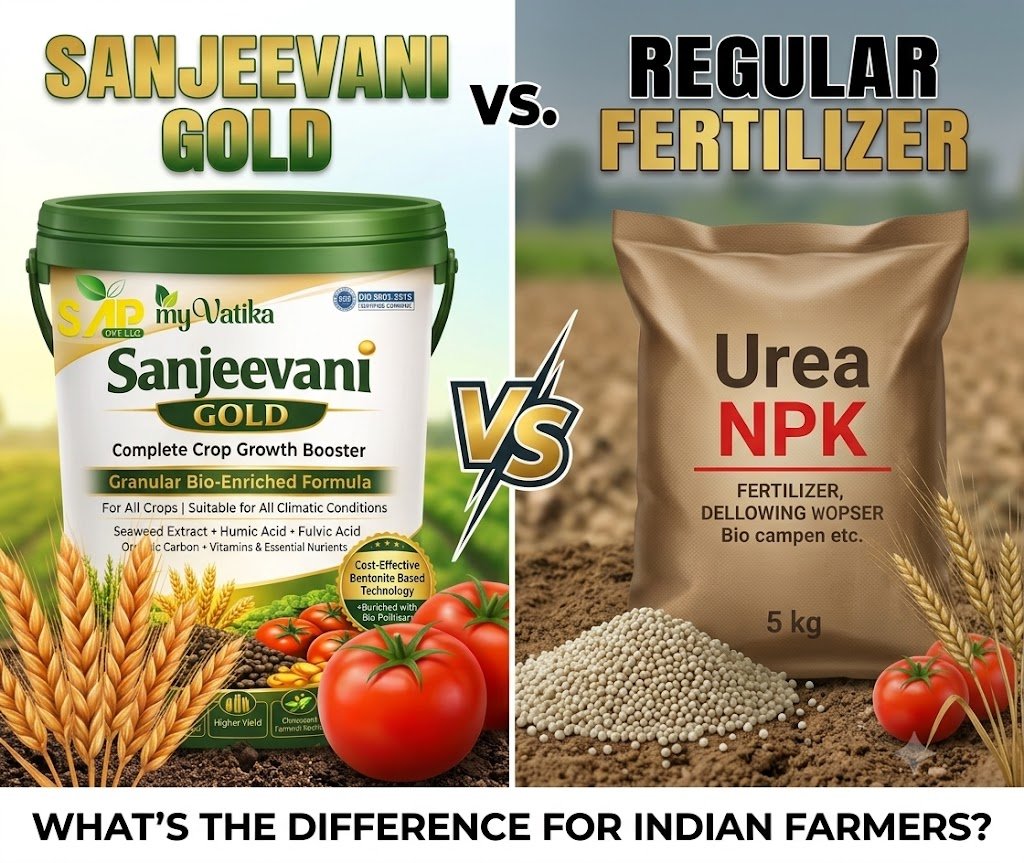
Choosing price over certification. This is especially true for agri-inputs. A bag of uncertified potting mix or fertilizer looks identical to a certified one. The difference shows up weeks later when your plants start showing problems. For any organic or bio-based input, look for ICAR recommended credentials, DPIIT recognition, or ISO 9001:2015 certification. These are verifiable — not just claims on a label.
Not getting terms in writing. Verbal pricing commitments, delivery promises made over WhatsApp, stock availability confirmed on a call — none of this protects you when something goes wrong. Before any money moves, get a written quotation with pricing, quantity, delivery date, and damage or return policy. A supplier who won’t put this in writing is one you’ll regret working with.
Mixing up wholesale plants and wholesale agri-inputs. These are often separate supply relationships. Your plant supplier and your fertilizer, potting mix, or soil additive supplier may need to be different companies — and that’s fine. What matters is that both are operating at a wholesale level with verified quality.
What to order alongside plants — the part most buyers skip
The inputs that go with your plants — potting mix, bio fertilizers, organic manure, soil conditioners — are just as important as the plants themselves. And they’re where a lot of commercial buyers lose money without realising it.
Potting mix at scale: Generic garden soil compacts quickly in containers and creates drainage problems that show up as root disease weeks later. For nursery and commercial planting at scale, you need a proper mix — cocopeat for moisture retention, vermicompost for nutrition, and a gritty aggregate like cinder for drainage. For specialty plants like adenium, always use a dedicated adenium potting mix. Standard soil causes root rot in desert rose varieties — full stop.
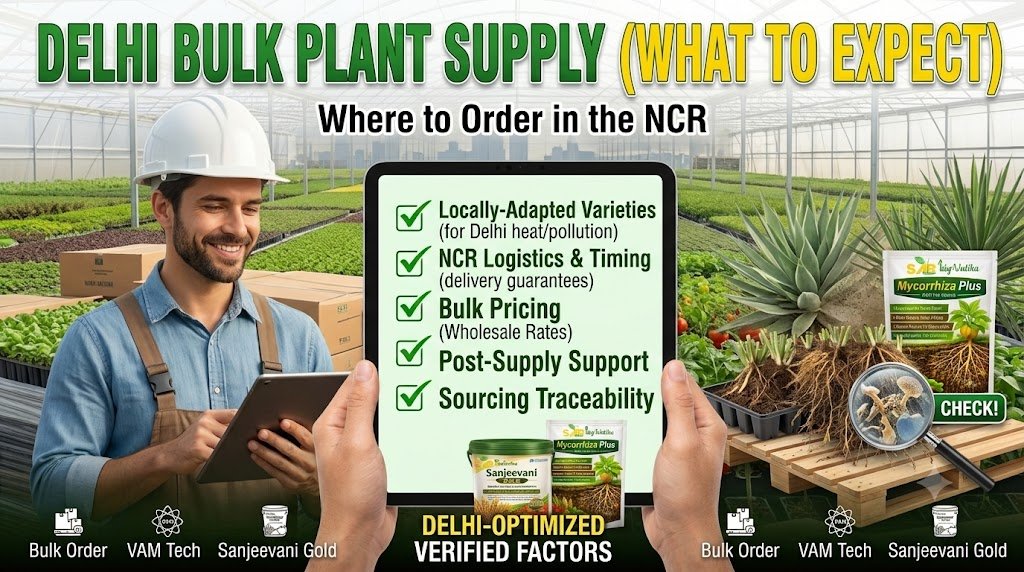
Bio fertilizer for establishment: When plants are moved in large quantities, root stress is unavoidable. A mycorrhiza VAM bio fertilizer applied at planting time reduces transplant shock significantly by extending the root network and improving the plant’s access to water and nutrients from the start. ICAR recommended products like SAP Mycorrhiza Plus are used by commercial nurseries across India for exactly this — less shock, faster establishment, stronger early growth.
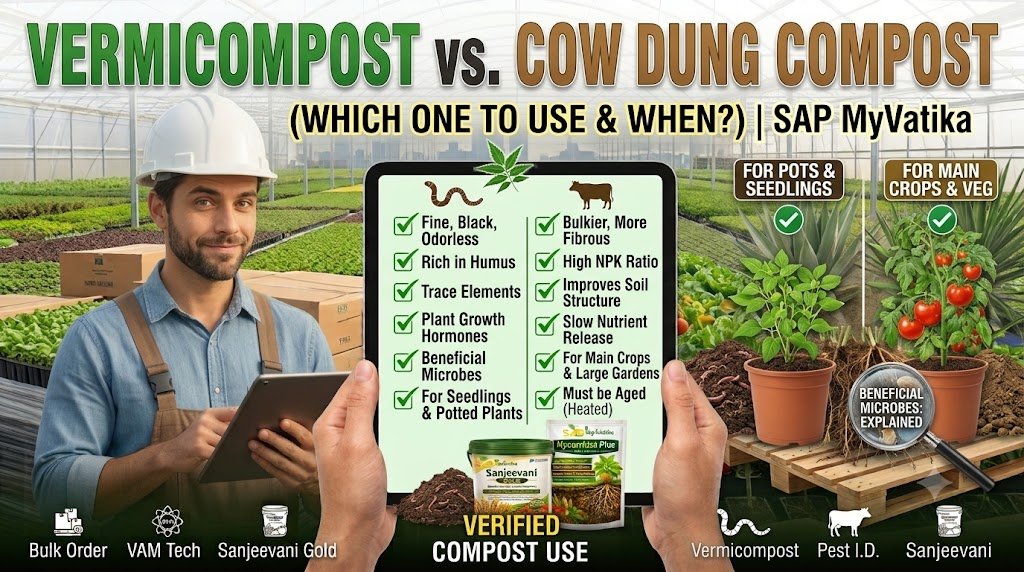
Vermicompost and organic manure: For soil preparation before large-scale planting — whether it’s a landscaping project, a nursery bed, or a cooperative farm — vermicompost and cow dung compost improve the soil foundation your plants go into. Both are available from SAP MyVatika in bulk with wholesale pricing and pan-India delivery.
Mustard cake powder and neem cake: High nitrogen, organic, and cost-effective for large-scale use. Mustard cake powder (sarso khali) is one of the most underused bulk inputs by Indian commercial buyers — it’s significantly cheaper than chemical nitrogen sources and improves soil biology rather than degrading it.
How to set up a proper wholesale supply relationship
Find suppliers who operate like a business, not like a shop. They should have a dedicated B2B team or point of contact, a written wholesale price list, and the ability to give you a written quotation within 24 hours.
Start with a test order — always. Check packaging quality, actual delivery time, and product condition on arrival.
Build the relationship over two or three orders before committing to large volumes. A supplier who is reliable on small orders is reliable on large ones. A supplier who has problems on small orders will have bigger problems when you scale up.
Keep your agri-input supplier separate from your general procurement if needed. Quality certification matters more for inputs than for most other purchases — and a supplier with ICAR recommended, DPIIT recognised, and ISO certified products is worth the slightly more structured procurement process.
SAP MyVatika — wholesale agri-inputs for commercial buyers across India
We supply potting mixes, bio fertilizers, organic composts, soil additives, and organic cakes to nurseries, landscapers, cooperative farms, and institutional buyers — in bulk, with wholesale pricing and pan-India delivery in 3–5 business days.
Our range includes adenium potting mix, bonsai potting mix, succulent and cactus mix, SAP Mycorrhiza Plus VAM bio fertilizer, vermicompost, cow dung compost, murgi khaad, hydrogel crystals, cocopeat, mustard cake powder, and neem cake. Everything is chemical-free, ICAR recommended, and ISO 9001:2015 certified.
📞 Bulk Order Enquiry: sapmyvatika.com
🌿 Kisan Helpline: 7303037568
✅ ICAR Recommended | DPIIT Recognised | ISO 9001:2015 Certified